
Research

Bittersweet Company: Relational Frames and Entrepreneurial Pursuit in a Post-Deregulation Cocoa Industry
Revise and Resubmit at Organization Science
- Runner-up, Best Student Paper Award, OMT Division, Academy of Management, 2026
- Best Paper Proceedings, OMT Division, Academy of Management 2026
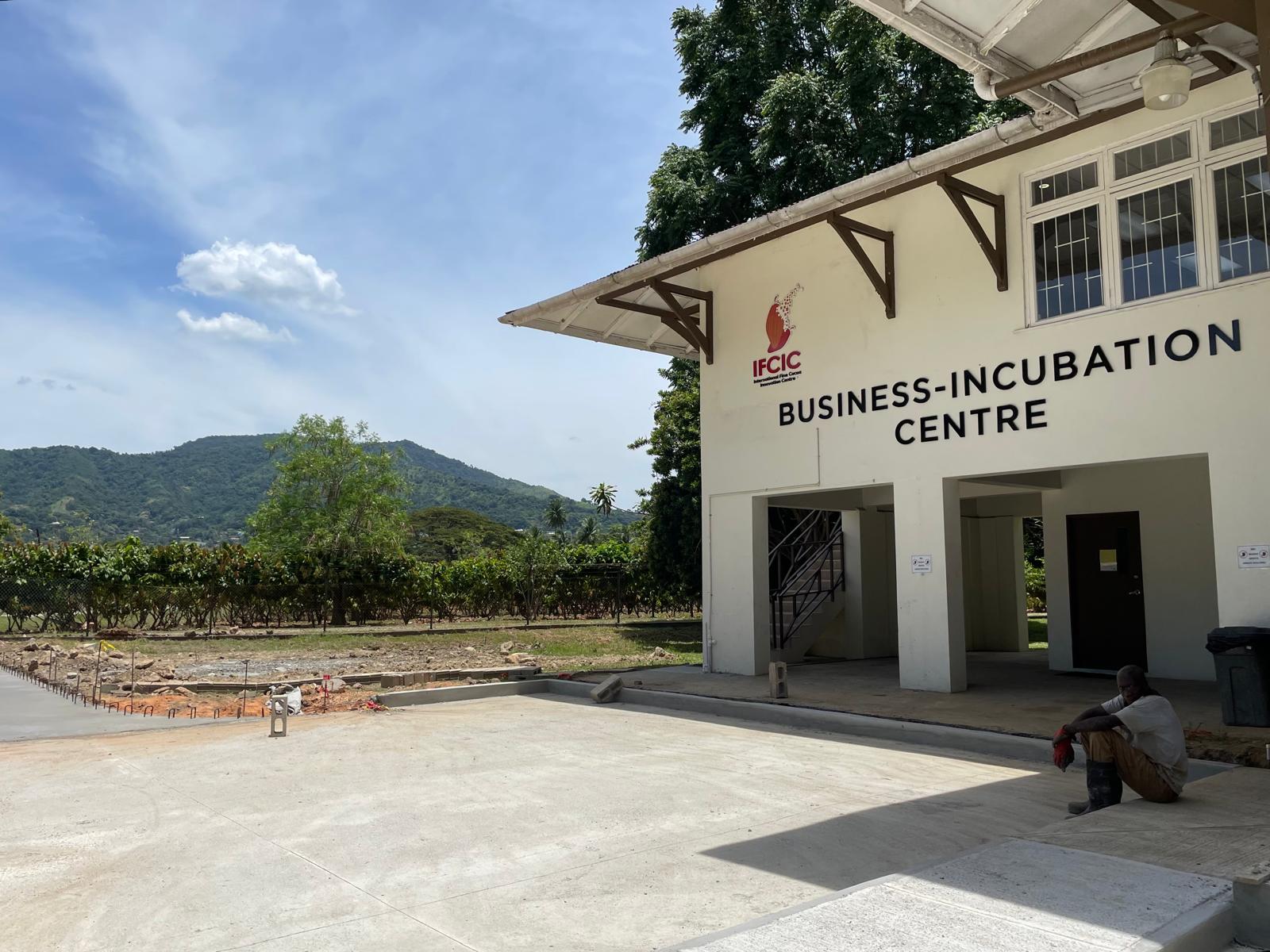
Market disruptions are often viewed as moments that create new entrepreneurial opportunities; yet they also shake the longstanding social arrangements through which actors coordinate economic activity. We know little about how such changes shape entrepreneurs’ decisions to pursue new activities following disruptions. Drawing on an inductive longitudinal study of 54 incumbent cocoa farmers in Trinidad and Tobago following deregulation of the cocoa industry, I develop a theory of how relational frames shape entrepreneurial responses to market disruption. Relational frames are individual-level interpretive schemas through which actors understand who should be involved in economic activity, and on what terms. Prior to deregulation, farmers operated through a benevolent hierarchy relational frame in which legitimate authorities coordinated knowledge transfer, resource allocation, and pricing. Deregulation introduced new buyers and technical experts who operated through a co-creation relational frame emphasizing dialogue and collaboration. Despite having broadly comparable baseline material resources and productive capabilities, farmers responded heterogeneously to this mismatch. Those who perceived minimal visibility risk—the perceived dangers of becoming visible to potentially exploitative actors—engaged with new economic alters and, through sustained interaction, revised their relational frames and pursued new entrepreneurial activities. Among those who perceived higher visibility risk, most avoided engagement and exited the industry. Some, however, sustained market participation through relational bridging, whereby intermediary agents either facilitated engagement that produced frame revision or absorbed the relational demands of engagement on farmers’ behalf. This study contributes to organizational theories of entrepreneurship in the Global South by highlighting the interpretive work through which entrepreneurs (re)construct relational certainty amid changing markets.
Recursive Intermediation: Institutional Intermediaries and Discretionary Resource Distribution in an Emerging Market
Complete manuscript
Institutional intermediaries play a central role in emerging markets by mobilizing knowledge, resources, and legitimacy for entrepreneurs. Yet intermediaries in early-stage markets often operate under conditions of material constraint and uncertainty, likely requiring them to exercise discretion in how they allocate limited resources. The literature on institutional intermediation has yet to examine whether and how intermediaries exercise such discretion and how these decisions shape the kinds of businesses entrepreneurs ultimately build. Drawing on an inductive, longitudinal study of the post-deregulation cocoa industry in Trinidad and Tobago, I examine how intermediaries allocate resources across 136 potential intermediary–entrepreneur pairs spanning 34 enterprises and 4 intermediary organizations. I show that intermediaries’ own goals, constraints, and performance pressures shape which entrepreneurs they engage beyond formal programs and how they allocate critical discretionary resources. Through this selective engagement, intermediaries channel qualitatively different forms of knowledge, product development support, and market access across relationships, producing systematic differences in entrepreneurial development. These differences give rise to distinct trajectories that are strongly aligned with entrepreneurs’ social class backgrounds. In contrast to the common depiction of intermediation as a one-way process, I conceptualize it as a recursive process that differentially structures access to resources. This study contributes to research on institutional intermediation and entrepreneurship by explaining who gains access to intermediated resources and how that access shapes the ventures they develop. In doing so, it shows how the social reproduction of inequality can become embedded in efforts to build new markets rather than arising solely from competitive dynamics.

It Takes a Village? Livelihood Communities and the Communal Governance of Entrepreneurial Action
Complete manuscript
Across entrepreneurship, organization theory, economic sociology, and management studies, a growing body of research examines the role of communities in shaping entrepreneurial action. While this perspective has productively challenged atomistic accounts of entrepreneurial action, it offers limited conceptual guidance for understanding what kinds of communities are able to govern entrepreneurship and under what conditions. This review develops an integrative framework that identifies factors for explaining variation in how communities organize entrepreneurial activity. It first synthesizes diverse conceptualizations of community across subdisciplines to crystallize the concept of livelihood communities—economic communities whose members’ livelihoods are organized through both market and nonmarket relationships—as the relevant governance arena for entrepreneurship. It then identifies four community conditions—relational history, shared adversity, social stratification, and external intervention—that shape communal governance across three domains of entrepreneurial action: motivating entrepreneurial entry, sustaining enterprises, and managing relations with external stakeholders. This review provides a conceptual foundation for future research on communities as governance arenas for entrepreneurship.

